

.


BOTANICAL BIOGRAPHY OF THE NETHERLANDS
The life story of plants on a journey
The Botanical Biography of the Netherlands traces plants from outside Europe that became connected to the Netherlands from the sixteenth century onwards through trade, science, and colonial networks. Using historical botanical books, drawings, paintings, living collections, and crops, we explore the stories behind these plants and their relationship to the Dutch East India Company (VOC), the Dutch West India Company (WIC), and the subsequent colonial period.
Plants have shaped our history, and the Netherlands owes a significant part of its prosperity to plants. Yet this awareness has largely disappeared. Stories and images are scattered across archives and are rarely visible in context.
With this project, we are bringing together the botanical heritage of the Netherlands by province.
Through plants, stories are visualized about:
# Botanical artists & researchers
# Local plant knowledge
# Trade history: colonialism, slavery and contract laborers
# Biodiversity
# Emancipation

What is a Botanical Biography?
A Botanical Biography describes and illustrates the history of a province.
as if it were a living being, with the plant as the starting point.
In doing so, we investigate the question:
what role did local plant knowledge of indigenous communities play, to slavery
skilled people and other local knowledge holders in the way plants
were discovered, used, imagined, and disseminated during the VOC/WIC period
and the subsequent colonial period?
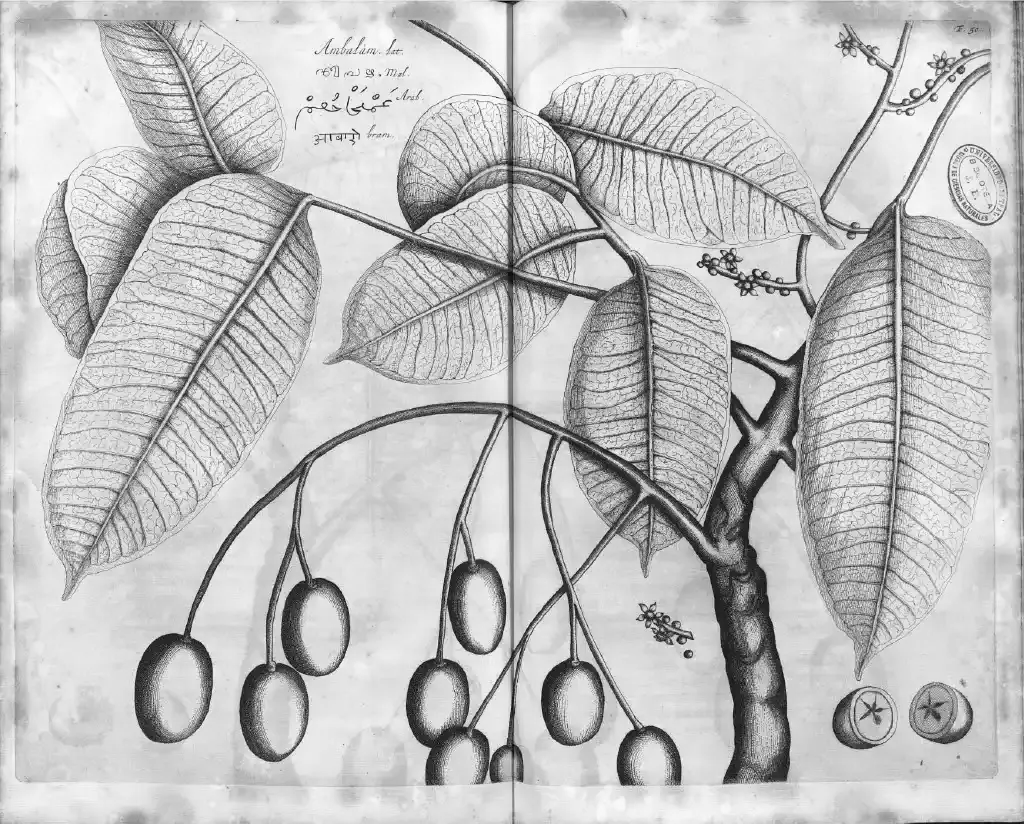
# 1: Drawn & painted plants
From the 17th century onwards, thousands of plants were collected, dried, drawn, and painted by famous and lesser-known botanical artists, collectors, and explorers.
Research question: what role did local plant knowledge play in the documentation of plants?
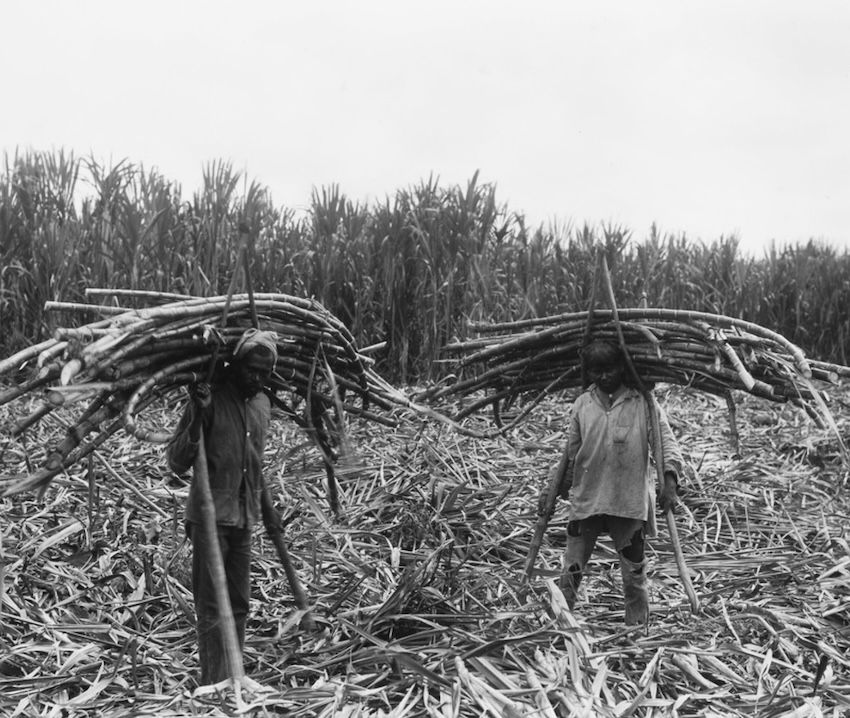
# 2: Cultivated crops
Plants, people, and estates connected to former coffee, tea, cotton, tobacco, sugar, and cocoa plantations in Asia, Africa, and the Caribbean & to the trade in indigo and spices.
Research question: what role did local plant knowledge play in the economic application of plants?
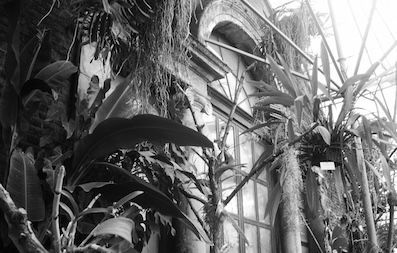
#3: The living (saying) plant
Acclimatized tropical plants in botanical gardens, gardens, conservatories, greenhouses, and orangeries – brought along on the ships of the VOC/WIC.
Research question: what role did local plant knowledge play in the spread and introduction of plants?
Why is a Botanical Biography of the VOC/WIC era and
Is the subsequent colonial period important?
A significant part of Dutch prosperity, cities, country estates, and cultural heritage originated thanks to the trade of the VOC and WIC in plant-based products such as sugar, coffee, cocoa, cotton, tobacco, indigo, and spices.
During the same period, thousands of plants were collected, studied, dried, drawn, and painted by botanists, artists, collectors, and explorers.
Behind this history lie stories of global exchange, scientific curiosity, colonialism, slavery, and the often overlooked plant knowledge of indigenous communities and other local knowledge bearers.
Over time, the awareness has faded that a significant part of our prosperity, our landscape, and our cultural heritage has its roots in the world of plants.
The mission of the Botanical Biography of the Netherlands is to rekindle this awareness. By making botanical heritage visible again, we show how plants have shaped our history, society, economy, culture, landscape, and identity.
At the same time, we investigate the role local plant knowledge played in the discovery, use, imagination, and dissemination of plants, and give these knowledge carriers a place in the story once again.
- COMMUNITY ART -
A botanical biography is visualized by residents of the relevant province.
They are creating a contemporary interpretation of the botanical heritage under the direction of a local artist.
The result is exhibited at various locations and subsequently digitized.
- Ongoing projects in provinces -
- Province of Utrecht -
The Province of Utrecht started in January 2026 as the first province.
with the creation of a Botanical Biography
- Upcoming projects in provinces -
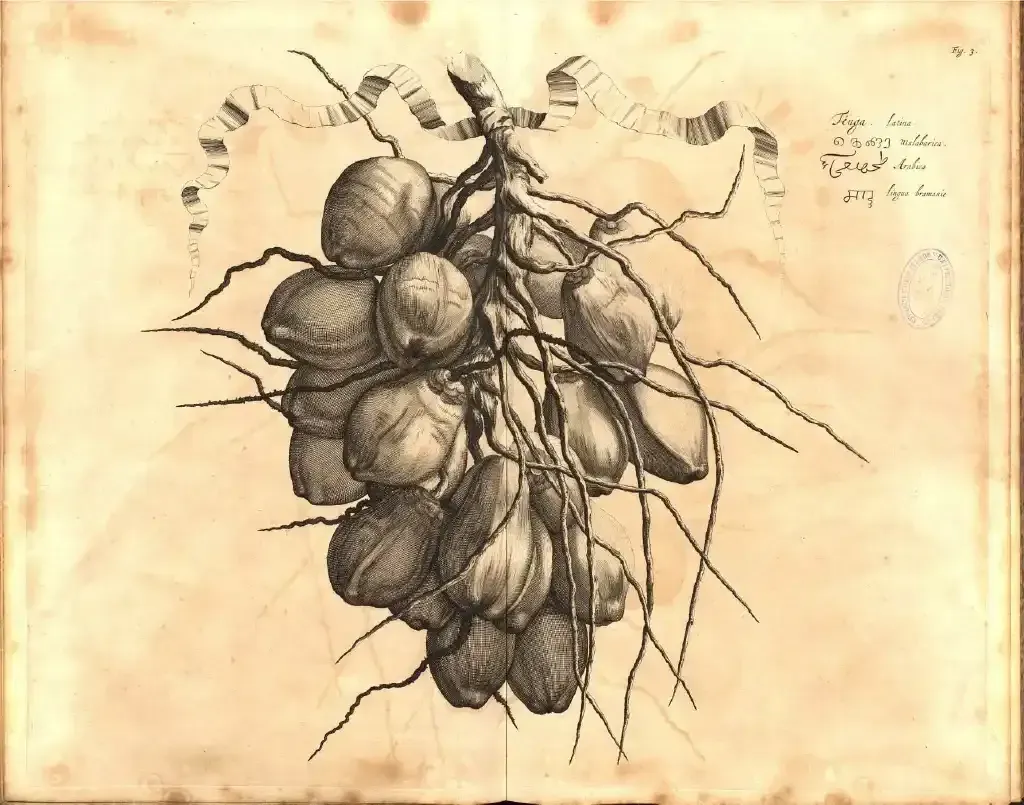
***
From 2027 / Q2, we are working on re-imaging the
Malabar Indian Garden of
Hendrick Adriaan van Reede to Drakenstein
en Itty Achudan
***
Province of Utrecht
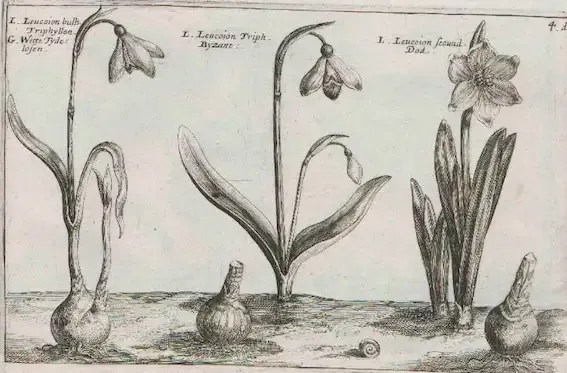
***
In February and March 2027, we will embroider the stinzen plants from the Hortus Floridius by the Utrecht engraver Crispijn van de Passe.
***
province of Utrecht
***
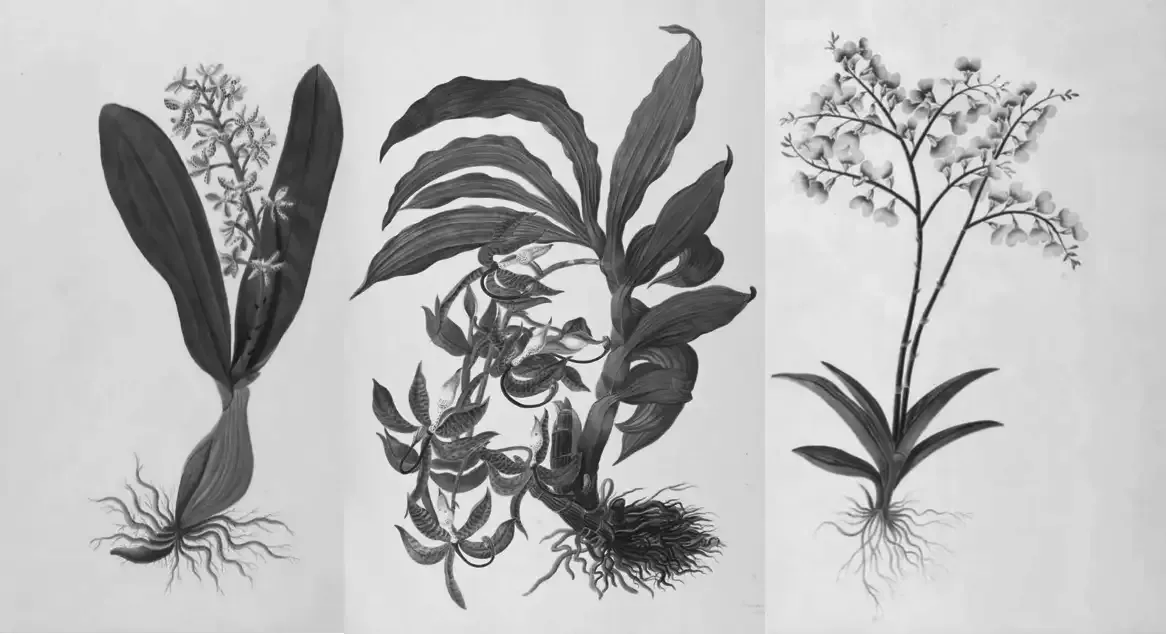
From 2027 / Q3, Gerrit Schouten's Surinamese orchids, among others, are scheduled to be featured.
***
province of North Holland
- Participate -
Check 'provinces' and discover when you can participate.
- News -
14/08/2026
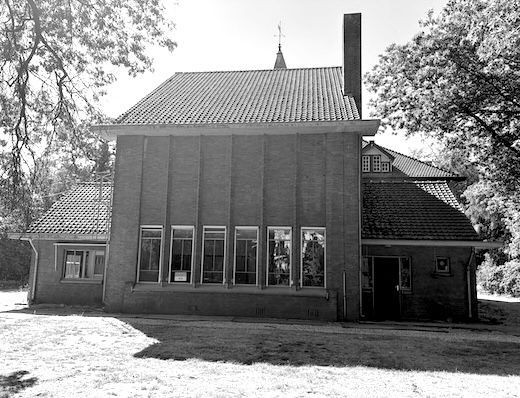
We have found an incredibly beautiful temporary workspace in Den Dolder!! Surrounded by forest and heath. An inspiring place to continue working together on the Botanical Biography of Utrecht.
With thanks to HOD.
22/05/2026
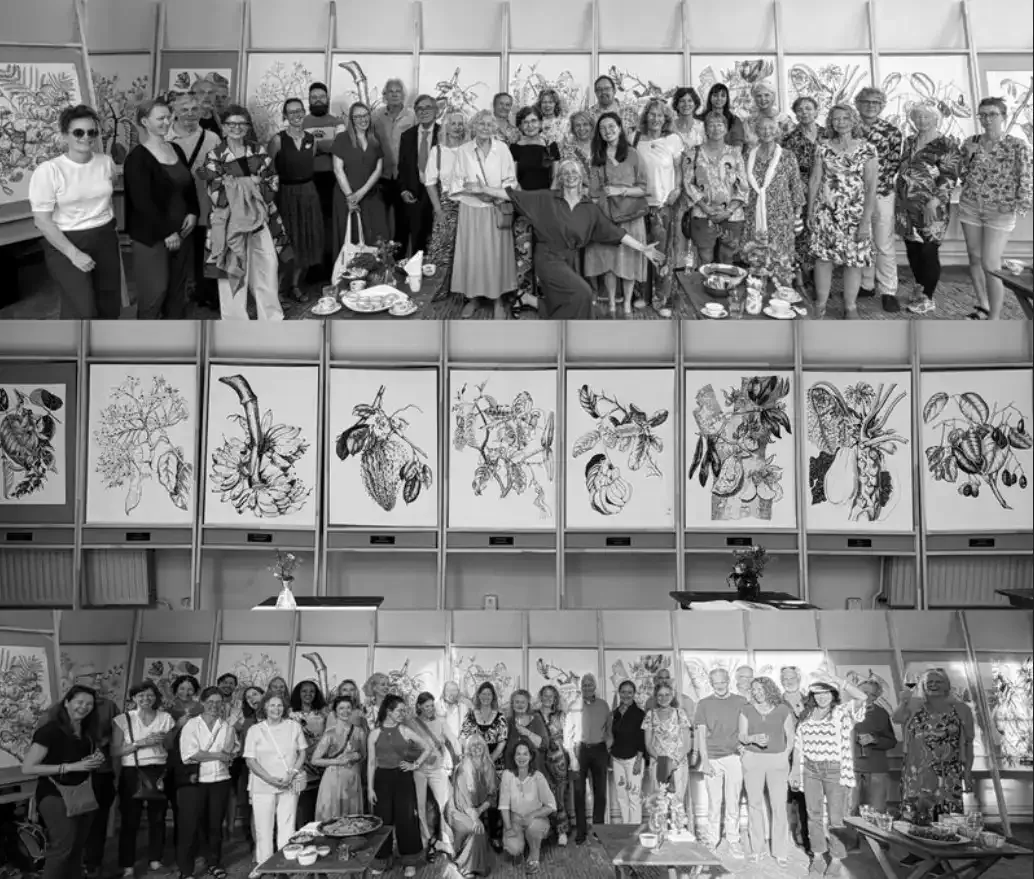
Proud of 107 illustrators!! The first exhibition of the Botanical Biography of the Netherlands is a reality – and what a wonderfully beautiful result: 25 insanely beautiful pen drawings in A0 format – an ode to Berthe Hoola van Nooten (1817-1892)
12/05/2026
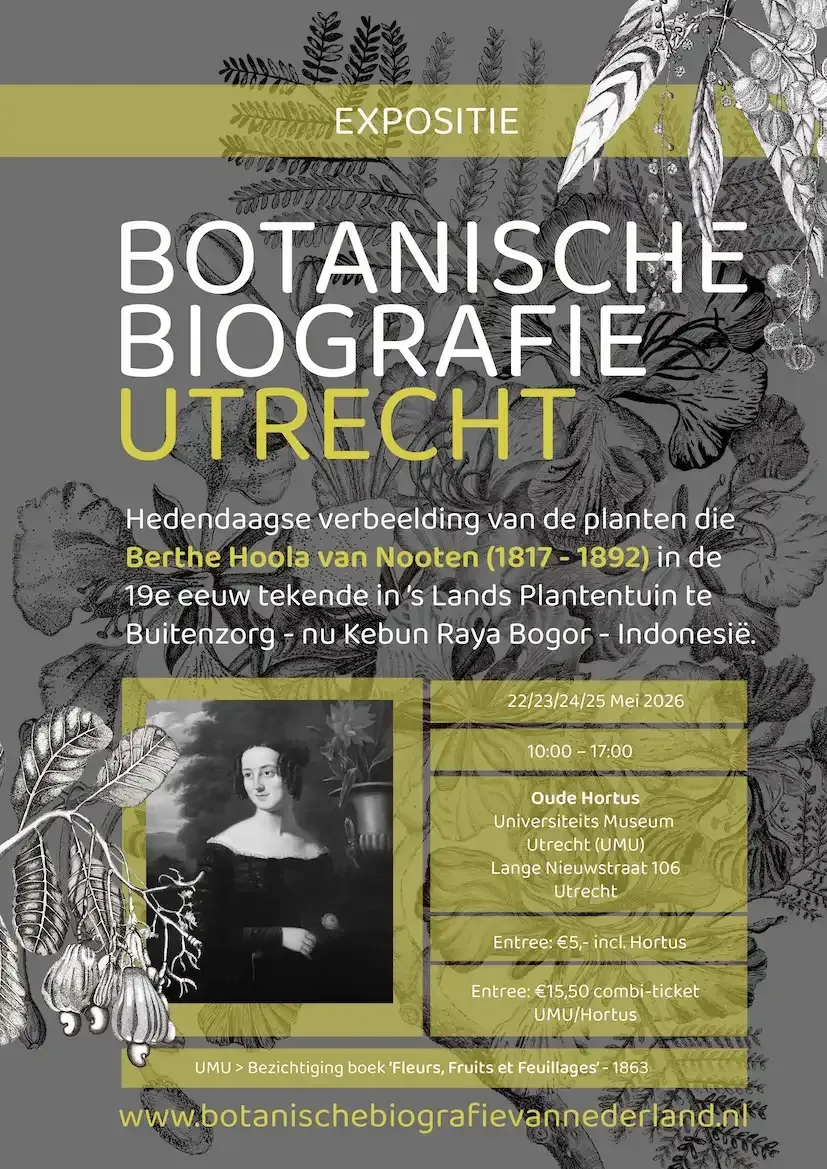
Exhibition in the Old Botanical Garden
-behind the University Museum Utrecht (UMU) from 22 - 25 May 2026 - a warm welcome!
21/02/2026
David Apollonius Coppoolse – author of the book: 'Berthe Hoola van Nooten (1817-1892) Life and work of an unprecedented flower draughtswoman' – is helping to bring back to life the drawings Berthe made in the National Botanical Garden in Buitenzorg in Bogor, Indonesia – now Kebun Raya Bogor.
23/06/2026
The second masterpiece of the Province of Utrecht: Hortus Indicus Malabaricus by Hendrick Adriaan van Reede tot Drakenstein and Itty Achudan can be viewed at the KB The Hague during the exhibition Flora Mundi – until the end of September 2026.
14/08/2026
We have found an incredibly beautiful temporary workspace in Den Dolder!! Surrounded by forest and heath. An inspiring place to continue working together on the Botanical Biography of Utrecht.
With thanks to HOD.
22/05/2026
Proud of 107 illustrators!! The first exhibition of the Botanical Biography of the Netherlands is a reality – and what a wonderfully beautiful result: 25 insanely beautiful pen drawings in A0 format – an ode to Berthe Hoola van Nooten (1817-1892)
With thanks to:
- all friends, family, and donors via Voordekunst
- Municipality of Utrecht and Province of Utrecht.
- the locations where we draw: Fort Maarsseveen, Eemhuis library, Huis van Eemnes, MEC Maarssen and Sporthuis Abcoude.
- special thanks to the University Museum Utrecht (UMU) and Friends of the Oude Hortus for making space available for drawing and for the first exhibition in the Oude Hortus (22-25 May 2026)
- archivists and conservators of heritage institutions who preserve, study, and make heritage items digitally available to the public:
Wageningen University & Research (WUR), Royal Library of The Hague (KB), Utrecht University (UU) & Rijksmuseum Amsterdam
- authors of books, see bibliography (= in progress)